

Love thy neighbor.
Yes, even now.

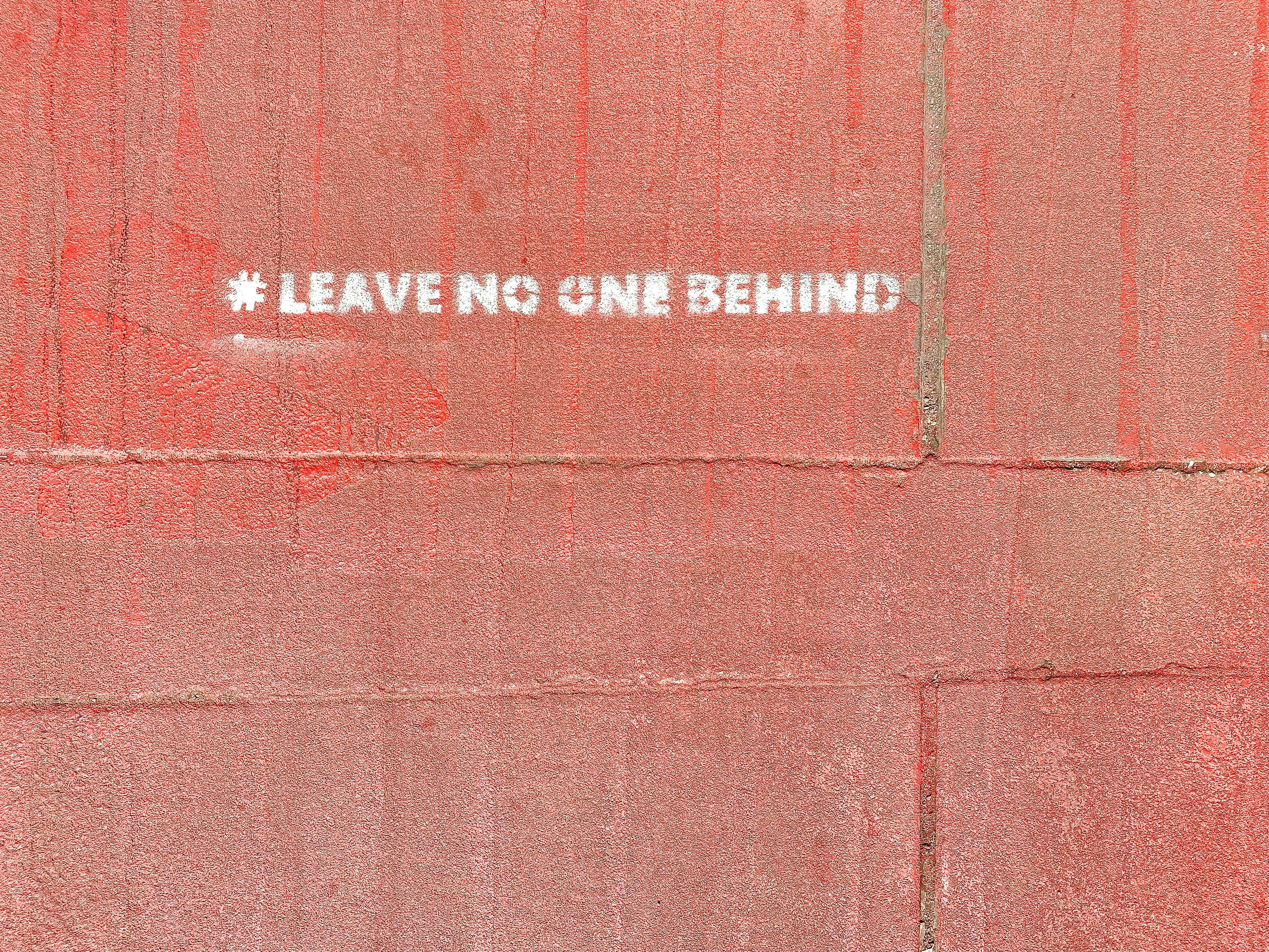
Well, here we are.
What a mess.
It turns out the election wasn’t the finish line! It was just another mile marker in a race that everyone was tired of running, and the only prize was sadness and anxiety. And yet, here we are—still neighbors, still coworkers, still sitting in the same church pews, still standing in the same grocery store lines. We still have to live together. (Maybe you don’t, but I do. I live in Idaho.)
So now the real question is: What kind of people will we be?
I think it’s worth discussing something uncomfortable for a second.
Somewhere along the way, many of us stopped treating politics as something we cared about and started treating it as who we are. It’s not just about policy preferences anymore—it’s about belonging. It’s about signaling to the world that these are my people. This is what I stand for. This is what makes me good and right and worthy.
And once we start thinking that way, something shifts. Suddenly, disagreement doesn’t feel like disagreement—it feels like a personal attack. If someone votes differently than we do, it’s not just a political choice; it’s a betrayal. If someone critiques our side, it’s not just an opinion; it’s an existential threat. We’ve all seen it happen. Maybe we’ve even felt it in ourselves. The way we double down when challenged. The way we start to view specific political affiliations as moral purity tests. How we let our party—or our anti-party stance—become the most important thing about us.
I have absolutely done this, lest anyone think I’m not critiquing myself here.
The people in power love it. It keeps us engaged, enraged, and so focused on defeating the other side that we don’t stop to ask whether we’re becoming better people in the process. But here’s the thing—our identity isn’t in a political party. It isn’t in a voting record. It isn’t in which news outlet we trust or which hot takes we endorse. It isn’t in our policy choices or even our advocacy.
As followers of Jesus, our identity is in Christ—full stop. The last time I checked, Jesus didn’t say, “They will know you are my disciples by your flawless political alignment.” He said, “They will know you are my disciples by your love.”
Compassion isn’t easy. If it were, we wouldn’t be in this mess. It’s much simpler to write people off, surround ourselves with like-minded voices, and assume that we are the rational and clear-headed while they are beyond reason. But that’s not how this works. At least, not if we’re serious about following Jesus.
Jesus didn’t say, “Tolerate your enemies.” He didn’t say, “Avoid them when possible.” He said, love them.
This doesn’t mean we don’t stand for truth. This doesn’t mean we don’t speak out when it’s required. It doesn’t mean we ignore injustice. It doesn’t mean we pretend that deeply harmful beliefs don’t exist. It certainly doesn’t mean we don’t have boundaries, and it doesn’t mean the politics don’t matter! Many years ago, I spoke at an event, giving a talk about political engagement and spiritual formation. I said to a room full of people, “Politics is the single largest systemic tool we have at our disposal to love our neighbor. Simply put, politics for Christians is institutional neighborliness.”
I still believe that with my whole heart.
Our politics should not form our faith. Our faith should form our politics.
It means we refuse to let hate and intolerance shape us. It means we stop assuming the worst about people before hearing them out. It means we recognize that, at the end of the day, we are all people with fears, hopes, and wounds—not just avatars of a political party.
And yeah, that’s inconvenient. It’s much easier to roll our eyes and disengage or even to get combative. But the problem is that disengagement doesn’t heal anything. Love does. So what do we do? How do we cultivate compassion when it seems that the whole world is designed to push us further apart?
Here’s a start:
Audit your media diet. If your media content makes you more angry than compassionate, cynical than hopeful, it might be time to rethink what’s shaping you. Are you being formed into someone who loves their neighbor or just someone who knows how to “win” an argument?
Step away from social media. Maybe for the afternoon, maybe forever. Up to you. But the backbone of these platforms is to weaponize your attention and use it to make money. It is inherently designed to piss you off and keep you scrolling. Use at your own risk.
Refuse to dehumanize. Don’t reduce people to political stereotypes, no matter how tempting it is. No one is the sum total of their worst opinions.
Listen more than you talk. Not to win or prove a point—just to understand. Approach conversations with curiosity instead of the need to be correct.
Step outside your bubble. Intentionally spend time with people who see the world differently. Read books, listen to podcasts, and engage with perspectives that challenge your own—not to change your mind, but to remind yourself that the world is more complex than just "us vs. them."
Have one real-life conversation for every online argument you don’t engage in. Instead of responding to that terrible Instagram post, go grab coffee with someone and talk about something other than politics. You’d be shocked by how grounding it is.
Create space for grace. People don’t change because they’re shamed into it. They change because they’re given the space to grow. Assume that people are more than their worst takes.
Practice small acts of kindness. Compassion isn’t just a mindset—it’s an action. Do something generous for someone you disagree with. Drop off a meal. Shovel a driveway. Show up for them in a moment of need.
Pray for the people who make you angry. Not in the “God, fix their nonsense” way, but in the “Lord, help me see them the way You do” way. It’s hard to hold onto hate when you’re asking God to help you love.
Take a deep breath before responding. Pause before you react, whether it’s an online debate or a frustrating conversation. Sometimes, silence is the most compassionate response.
Remember that people are more important than politics. Policies matter, but people matter more. Every person you engage with is someone deeply loved by God, which should change how we treat them.
The real work starts with this stuff. If all we’ve done is win (or lose) an election, but we’ve lost our capacity for compassion in the process, we’ve already lost something much bigger. So yes, be engaged. Be informed! Be clear-eyed about the very real challenges ahead. But above all, be someone who chooses love—especially when it’s hard. Especially now.
Because, at the end of the day, politics come and go and change with the wind.
But how do we treat each other? That’s the stuff that lasts.
Thank you 🙏 such actionable tips on ways to be a loving human. We need all the love we can muster to get through this time.
"Our politics should not form our faith. Our faith should form our politics." Amen!